Borussia Mönchengladbach's 5-1 demolition of Bayern Munich in December 2021 wasn't a fluke. It was a statement. For 90 minutes at Borussia-Park, the Foals pressed high, suffocated Bayern's midfield, and exposed a defensive line that had conceded just 11 goals all season. That night。the league took notice: Gladbach doesn't just compete with the giants—they can dismantle them. The scoreline flattered Bayern, if anything.What makes Borussia Mönchengladbach fascinating isn't just the occasional giant-killing. It's the method. The club has long been a laboratory for tactical innovation. In the 1970s, under Hennes Weisweiler, they pioneered a fluid, attacking style that won five Bundesliga titles. Today, the approach is more structured but equally ambitious. The insistence on playing out from the back, even under pressure, is non-negotiable. You'll see center-backs split wide, the goalkeeper acting as an auxiliary midfielder。and full-backs tucking inside to create overloads. It's risky. It's also thrilling. Against teams that press high, Gladbach sometimes coughs up chances—but they rarely abandon the principle. That stubbornness is both their strength and their vulnerability.The academy, the Fohlenstall, deserves its own chapter. Borussia Mönchengladbach's youth setup has produced a steady stream of Bundesliga talent: Marc-André ter Stegen, Granit Xhaka, and more recently, Florian Neuhaus and Nico Elvedi. The secret?
A focus on technical development over physicality. Young players are encouraged to take risks, to dribble out of tight spaces, to attempt the ambitious pass. Coaches there talk about 'training the brain' as much as the feet. It's a philosophy that occasionally backfires—some graduates lack the defensive grit for top-level football—but it's produced a recognisable identity. When you watch Gladbach's youth teams。you can see the first team's fingerprints all over them.
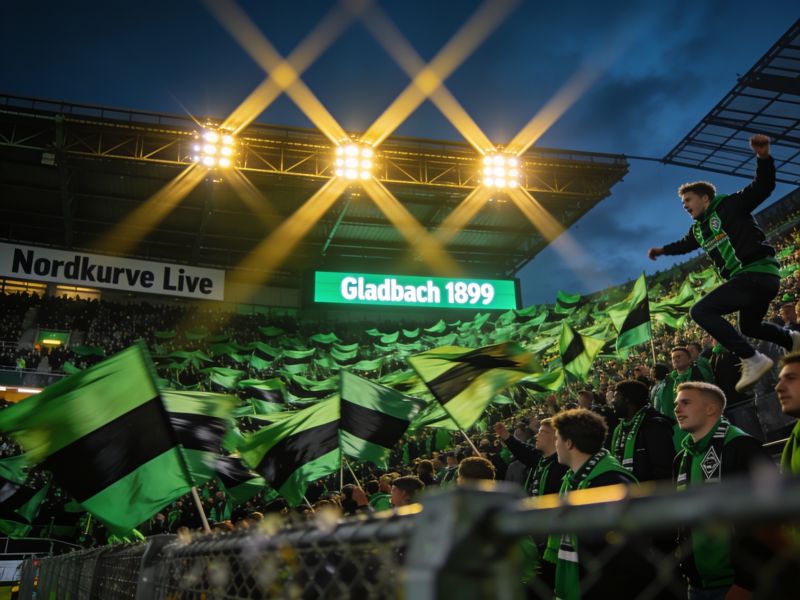
Scouting at Borussia Mönchengladbach operates with a budget that's modest by Bundesliga standards. The club can't compete with Bayern or Leipzig for ready-made stars. So they buy smart. Players like Alassane Pléa and Marcus Thuram arrived with question marks—Pléa from Nice, Thuram from Guingamp—and left as household names. The scouting network focuses on under-23 players with specific tactical profiles: high work rate。versatility, and an ability to play in multiple positions. Data analysis complements traditional eye-test scouting, but the final call often comes down to character. 'We look for players who fit the dressing room,' a club insider once told me. 'Talent is everywhere. Personality is not.' That approach has kept Gladbach competitive without breaking the bank.Borussia Mönchengladbach's relationship with its fans is unusually intimate. The Nordkurve at Borussia-Park is a wall of noise。but it's not just noise—it's organised. Fan groups coordinate tifos, choreograph chants, and hold the club accountable on issues like ticket pricing and kick-off times. When the club considered moving a match to a Monday night, the backlash was swift and effective. The fans won. That kind of influence is rare in modern football. It shapes the club's decisions, sometimes frustrating the commercial department. But it also creates a sense of shared ownership. Players talk about the atmosphere at home games as a genuine advantage. Opponents notice it too. 'You can feel the history,' one visiting manager said. 'It's not just a stadium. It's a statement.' For Borussia Mönchengladbach, that's the point.